


Then and now, always in the heart of Sapporo.
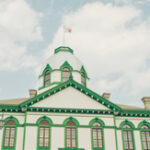
The Clock Tower TEXT/DAIKI ITOH, PHOTO/NAOKO TAKAHASHIA wine-red roof, milky-white timber-framed walls, and a proudly displayed four-sided clock tower — a wooden building that stands as the symbol of Sapporo: the “Clock Tower.” Its official name is the “Former Sapporo Agricultural College Drill Hall.” Known affectionately as the “Clock Tower,” it’s beloved by residents and tourists alike. Its roots trace back roughly 135 years, when it was first built as the “drill hall” for Sapporo Agricultural College, the predecessor of Hokkaido University.
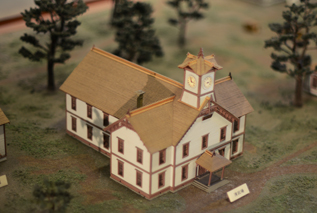
Dr. William S. Clark, the first vice principal of Sapporo Agricultural College, conceived the idea of a "martial arts training hall" with the goal of educating and training the people who would go on to lead Hokkaido's development. His successor as vice principal, William Wheeler, developed the basic plan, and the building was completed in Meiji 11 (1878). Originally, it had only a small bell tower for hanging a bell, with no clock function at all. However, Kiyotaka Kuroda, then Director of the Kaitakushi, deemed it too modest a structure for such an important base of Hokkaido's development, and firmly ordered a clock tower be added — giving it its current form.
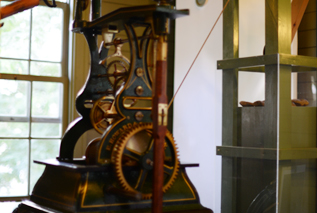
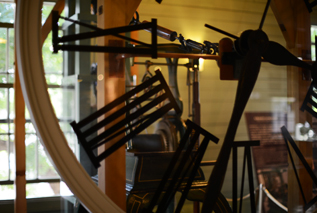
In time, the Clock Tower came to govern the rhythm of the city as the "standard clock of Sapporo Ward." In an era when owning a personal watch wasn't yet common, people looked up at the Clock Tower and listened for its bell, incorporating the concept of time into their daily lives. The bell's tone reportedly rang out across a radius of about one ri (roughly 4km), bringing comfort to the hearts of residents.
In Meiji 36 (1903), Sapporo Agricultural College relocated to its present site, now Hokkaido University. But the Clock Tower (Drill Hall) alone remained behind, taken over by Sapporo Ward. Its role shifted to serving as a public hall and library, opened up to residents and becoming an even more familiar presence. In this way, the Clock Tower grew beloved by Sapporo's citizens, and before long, came to be known as the symbol of Sapporo.
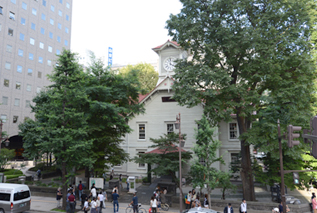
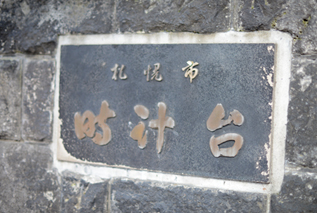
Yet today, the Clock Tower is also, in truth, sometimes mocked as a "disappointing landmark," standing somewhat cramped among the crowded buildings that surround it. Its bell's sound, once heard, is now swallowed by the city's noise and the forest of high-rises, audible only near the tower itself. Debate has flared up more than once over whether to relocate it to a hilltop or park more befitting Hokkaido's character. But the true significance of the Clock Tower — a living witness to the history of Sapporo, and of Hokkaido itself — lies precisely in its continued presence, right here, in this very spot.
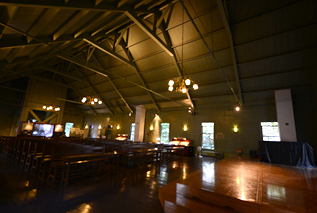
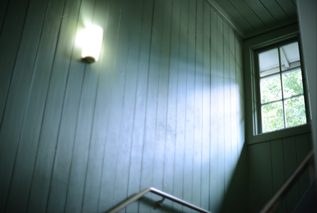
Encapsulated in the words "Boys, be ambitious," the Clock Tower stands as a symbol of Hokkaido's development. Carrying forward the resolve of the pioneers who worked tirelessly to develop Hokkaido, it still stands firmly in this place today, as Sapporo's symbol and as an emblem of its citizens' identity.
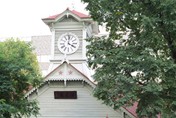
(National Important Cultural Property)
Former Sapporo Agricultural College Drill Hall, The Clock Tower
Kita 1-jo Nishi 2-chome, Chuo-ku, Sapporo
TEL.011-231-0838
Admission: Adults 200 yen
※Free for junior high age and under
Hours: 8:45 AM–5:10 PM
※Last admission 5:00 PM
Closed: 4th Monday of the month
※Following day if the 4th Monday is a public holiday
Year-end/New Year holidays (Dec 29–Jan 3)
sapporoshi-tokeidai.jp

関連する記事
新着ピックアップ
-
A genuine flavor that has walked alongside Sapporo's history.
3 Long-Established Ramen Shops in Sapporo -
150 years, and still beloved.
Ganso Kaminari-yoke Shinko -

A new standard that goes beyond a boom.
3 Sapporo Soup Curry Restaurants We Secretly Want to Keep to Ourselves -
Watching over the neighborhood for half a century — Susukino's mom and pop.
Hachiya


