


Same spending, better ingredients, a richer food life.
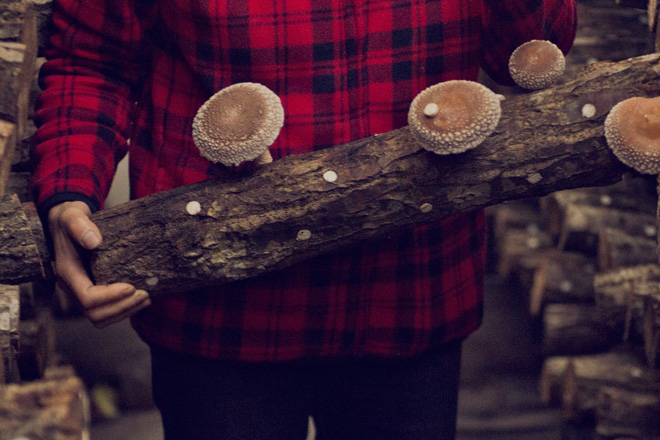
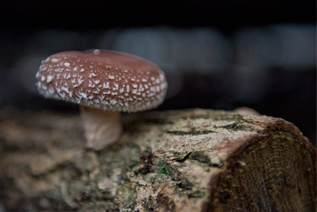
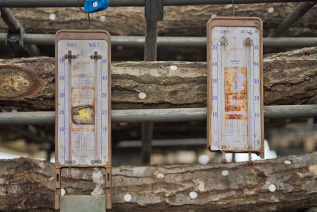
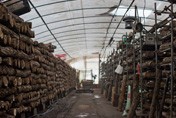
Raw-Wood Shiitake TEXT/KAGEHIRO WATANABE, PHOTO/NAOKO TAKAHASHIAbout 15 minutes by car from central Sapporo. Right by the Munich Ohashi bridge, wedged between the Toyohira River and National Route 453, sits the farm of “Hana to Kinoko Hosogai.” The first thing that catches your eye when you visit is a roughly 80-tsubo greenhouse. What’s grown here is “raw-wood shiitake.” Most shiitake mushrooms sold on the market are grown using the low-effort sawdust-block cultivation method. Compared to those, Hosogai’s “raw-wood shiitake” are on an entirely different level in texture, flavor, and aroma. We’d love to simply say “go try them” — but getting your hands on them isn’t easy. Because the supply is so limited, you’ll need to find them at one of the few co-ops or supermarkets they’re wholesaled to, visit one of the irregularly held direct-sales events at the Sapporo Ekimae-dori underground walkway (Chi-Ka-Ho), or order a dish featuring shiitake at a restaurant under contract with Hosogai, such as “Soba-ya Kendou.” A truly precious mushroom, in other words.
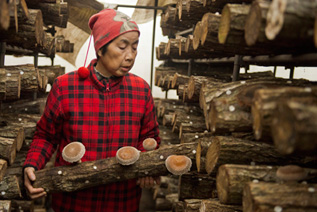
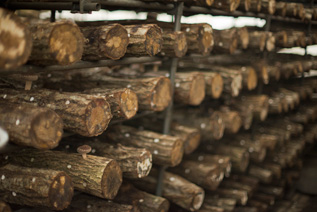
Shiitake aren't the only thing harvested at this farm. The "raw-wood nameko," available only in October and November, are so impressively large they're hard to believe are the same variety found in everyday miso soup. They're said to be delicious fried as tempura. True to the name "Hana to Kinoko" ("Flowers and Mushrooms"), the farm also sells 200 to 300 varieties of flower seedlings in spring, and reportedly grows 70 to 80 varieties of vegetables in its fields. Why go to the trouble of growing so many varieties? Farm owner Yoko Hosogai explains: "I try to think from the customer's perspective. If I just laid out ordinary vegetables, customers would think every farm looks the same. So I make sure to offer things that are fun to look at, things that are unusual." Yoko, who has placed in Sapporo's Flower Festa Garden Contest for four consecutive years, likely brings that same aesthetic sense to her colorful vegetable lineup.
※Vegetable seedlings, roughly 140–150 varieties, become available after May 20th. Advance viewing welcome (please call ahead).
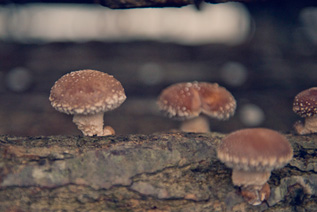
Incidentally, despite having plenty of devoted fans, Hosogai ships their vegetables labeled simply as "grown in Sapporo's Minami ward" — a choice rooted in their wish to raise the overall brand value of agricultural products from this region as a whole. At direct-sales events, they've also been known to teach customers how to grow "raw-wood nameko" themselves — reflecting that same underlying philosophy: a single-minded desire to spread awareness of farming itself. Plans are in place to open a direct vegetable stand on the farm sometime within 2015. For many people, it's likely to become a great opportunity to get their hands on delicious, fresh, safe produce, while also getting a chance to think about farming itself.

新着ピックアップ
-
A genuine flavor that has walked alongside Sapporo's history.
3 Long-Established Ramen Shops in Sapporo -
150 years, and still beloved.
Ganso Kaminari-yoke Shinko -
A new standard that goes beyond a boom.
3 Sapporo Soup Curry Restaurants We Secretly Want to Keep to Ourselves -
Watching over the neighborhood for half a century — Susukino's mom and pop.
Hachiya


